
Wystawa stała
from 30.06.2017
The Collection around MOCAK 2026
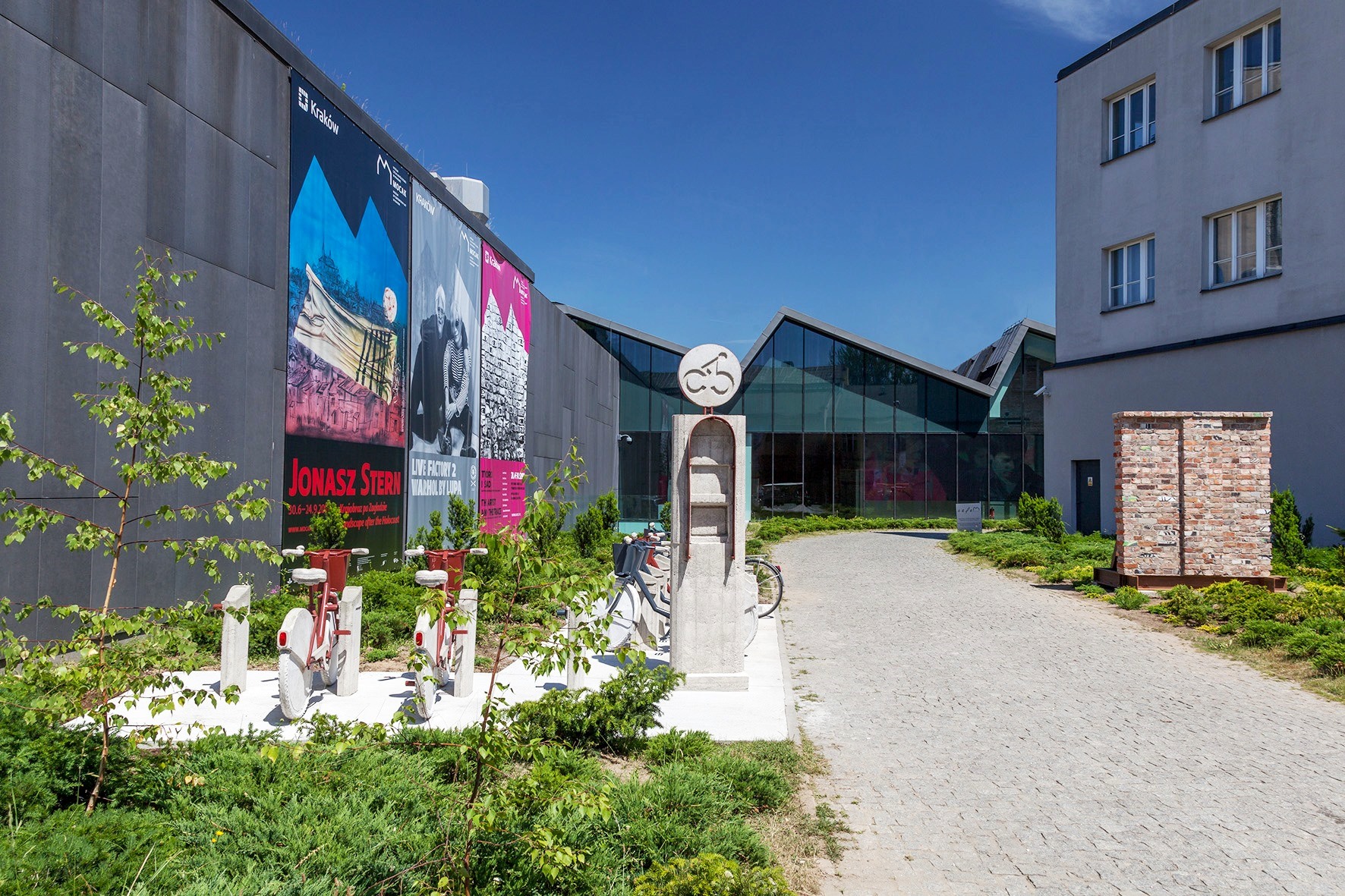
As part of this project, we are presenting works from our collection in the area surrounding the museum and in its immediate vicinity. These include sculptures and installations by Mirosław Bałka, Leopold Kessler, Łukasz Surowiec and Jakub Julian Ziółkowski. The works complement the permanent exhibition of the MOCAK Collection and are accessible to visitors regardless of the museum’s opening hours.
Łukasz Surowiec
(1985, Poland)
Berlin-Birkenau
2012
From the areas adjacent to the Auschwitz-Birkenau camp, where the ashes of those murdered were scattered during World War II, the artist dug up some 400 young birch trees. He transported over 300 of them to Berlin, where, as part of the Biennale, they were planted in various locations, including parks, school grounds, cultural institutions, and memorial sites associated with deportations and the Holocaust. He left the remaining birch trees in his own garden or gave them to friends. Three of these trees were included in the exhibition Poland – Israel – Germany: The Experience of Auschwitz, and after the exhibition ended, they became part of the MOCAK Collection. They now grow in front of the museum’s entrance. The trees are not only living monuments intended to preserve the memory of the Holocaust, but also the descendants of its witnesses.
Location: the entrance to the museum from Lipowa Street
Leopold Kessler
(1976, Germany / Austria)
Surrogate City Bike Station / MOCAK 2015
2015/2017
Location: the path to the museum from Lipowa Street
Leopold Kessler is an artist working in public spaces, and his interventions take the form of performances, usually filmed, or permanent installations. The artist designs each of his works for specific institutions, taking into account the unique characteristics of the location. One such installation, the ‘dead café’, can be seen in the courtyard of the 21er Haus museum in Vienna. The work designed for the MOCAK Collection is similarly ‘unusable’. It is a concrete mock-up of a bike-hire station. From a distance, it looks like a real bike station; up close, it turns out to be a sculpture.
Location: the path to the museum from Lipowa Street
Jakub Julian Ziółkowski
(1980, Poland)
The Spirit of Our People
2022
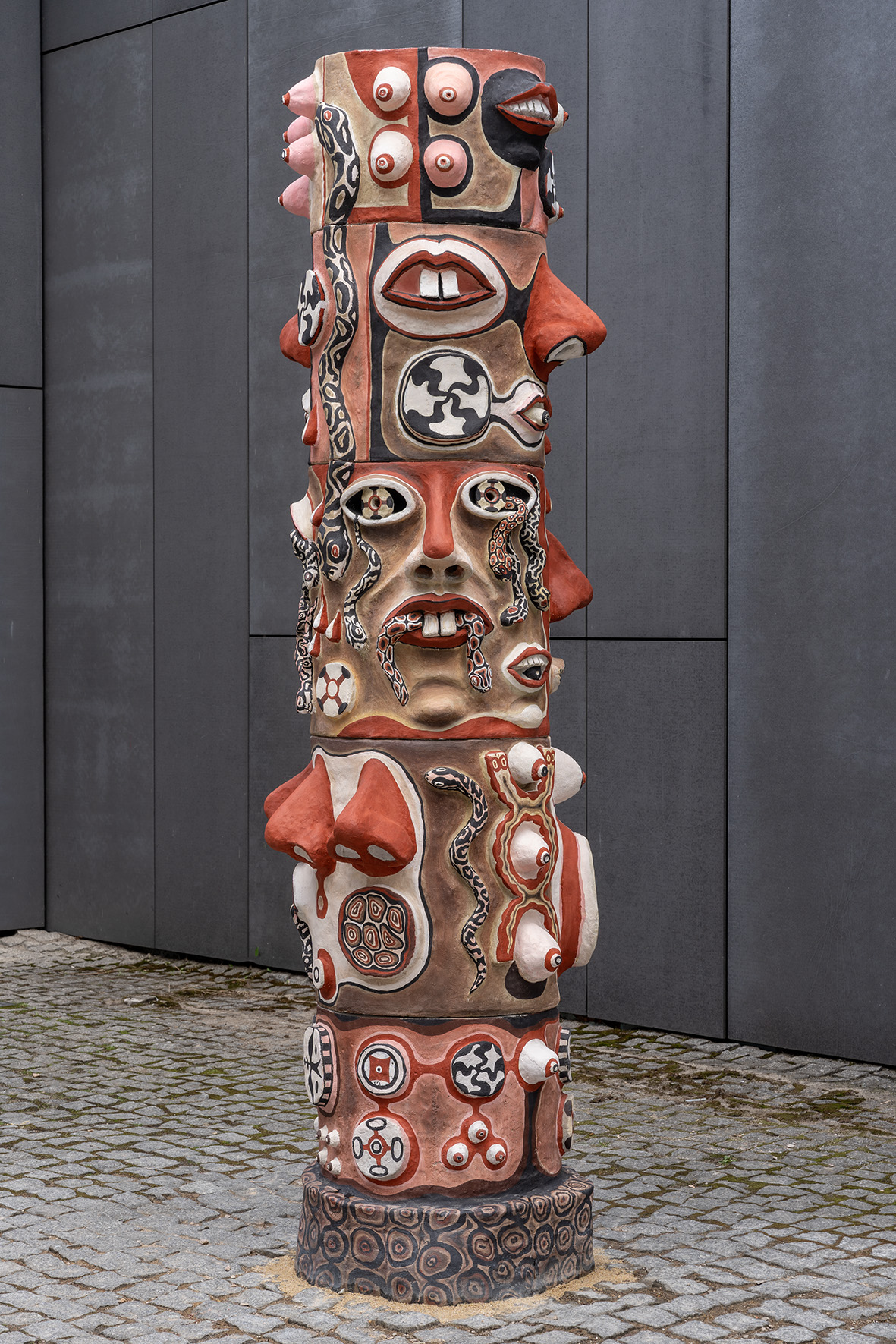
The work was created for the artist’s solo exhibition entitled You Are Mine at MOCAK in 2023. Its form resembles a monumental totem. It is constructed from five concrete rings, covered in bas-relief and painted forms, depicting the characteristic motifs of Jakub Julian Ziółkowski’s work: multiplied mouths, noses, breasts and eyes, as well as snakes and magical stones with abstract patterns. Both the individual motifs and the form of the sculpture evoke themes of spirituality, the profound relationship between the corporeal, organic and sensual, and the cosmological and metaphysical dimensions of reality. The scale of the sculpture, its weight and the rough materiality of the concrete induce in the viewer a sensory experience of form familiar from the experiments of the minimalists. In turn, references to avant-garde and primal concepts of spirituality, such as the theory of the spiritual dimension of colour (Kandinsky), the exploration of the subconscious power of symbols (Surrealism), the presence of elements typical of indigenous cultures (Aboriginal and Native American art), and a painterly texture reminiscent of Palaeolithic art give the viewer a sense of belonging to the human community in its historical continuity and beyond geopolitical divisions. Through numerous formal references to art history, culture and spirituality, Ziółkowski incorporates the human being as a cultural entity in the primeval celestial order, thus turninghis sculpture into a thoroughly contemporary and humanistic work.
Location: next to the main entrance to the museum
Mirosław Bałka
(1958, Poland)
AUSCHWITZWIELICZKA
2008/2009
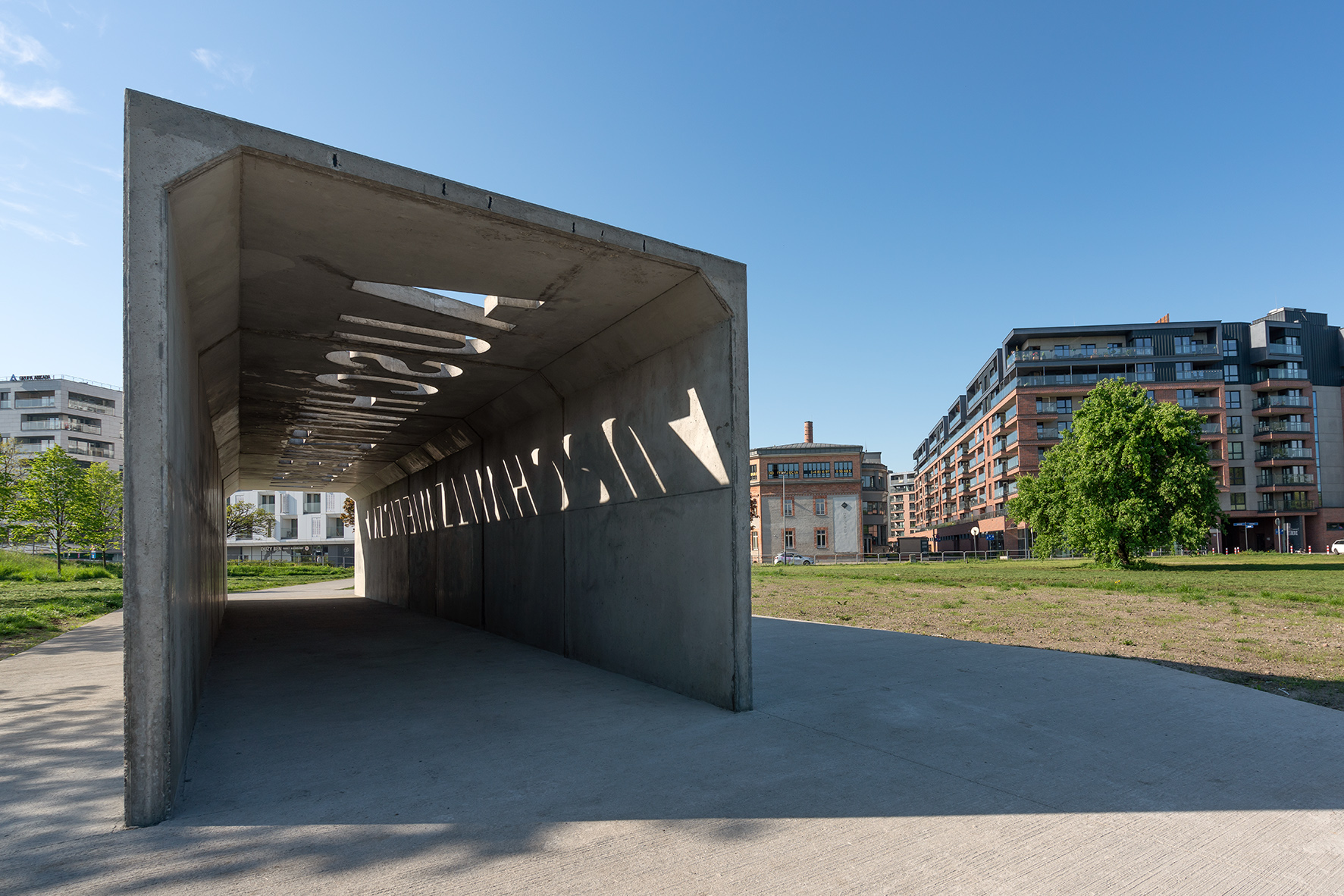
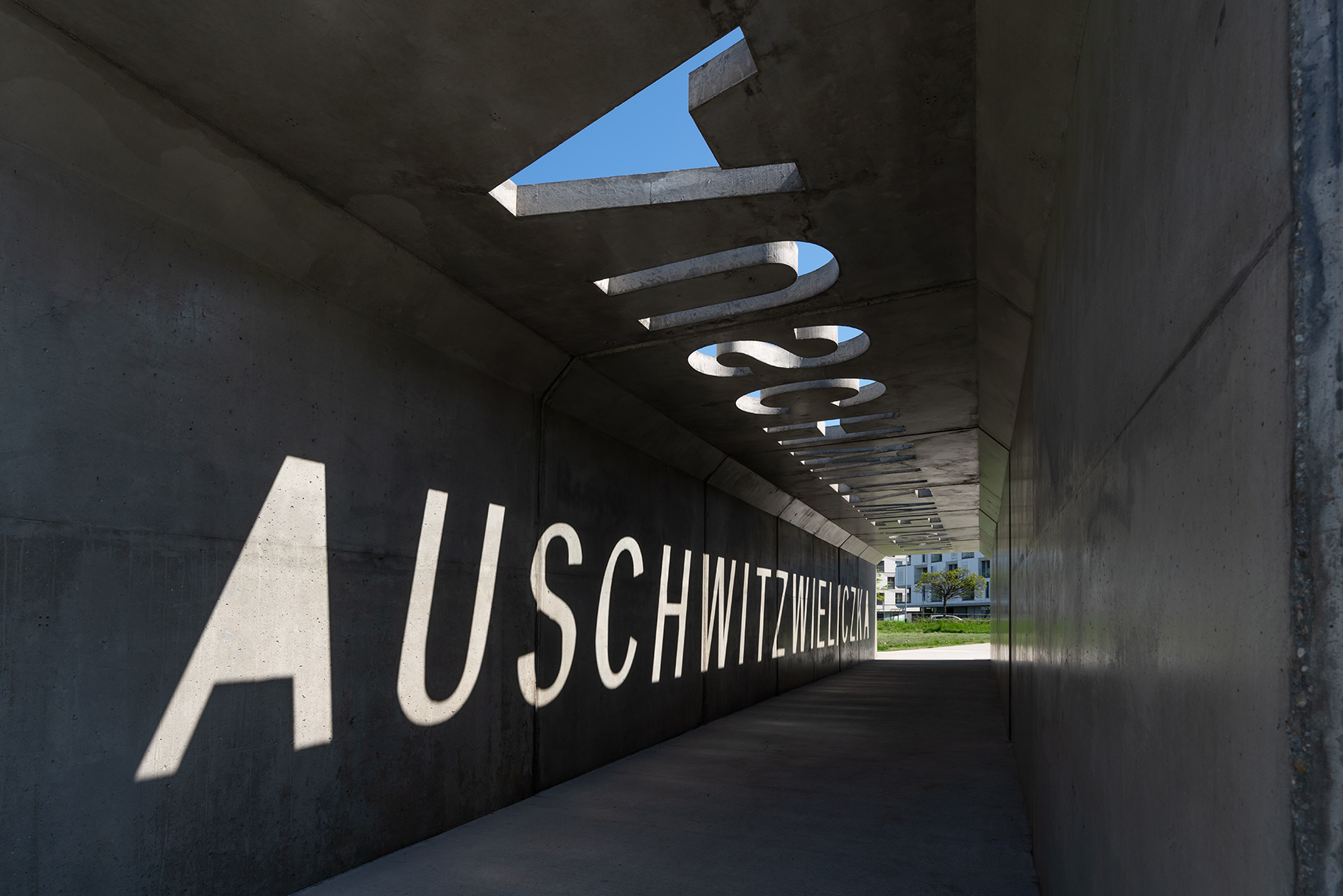
The sculpture takes the form of a concrete tunnel 17 metres long, 2.5 metres high, 2.5 metres wide and weighing 17 tonnes. In daylight, the words ‘AUSCHWITZWIELICZKA’ carved into its ceiling are projected onto the walls. This compound word ironically references the insensitive juxtaposition of the two locations, ubiquitous in the advertisements of Kraków tourist agencies touting combined trips to the Wieliczka Salt Mine and the Auschwitz-Birkenau camp. This packaging fails to recognise the distinct character and remembrance significance of these destinations. This is not the first time this work has been displayed in Kraków’s urban space. In September 2009, the sculpture was unveiled on Niepodległości Square in Podgórze. In August 2010, it was moved to Lipowa Street, next to the tunnel of the Kraków Zabłocie railway station, in the vicinity of MOCAK and the Museum of Kraków. In March 2016, during the expansion of Kraków Zabłocie station, the sculpture was stored on land belonging to the Municipal Transport Company. Since 2018, the work has been part of the MOCAK Collection. In 2023, the museum received permission from the Municipal Greenery Authority to install the sculpture in a square near the Kotlarski Bridge. The construction of the path and the foundation, as well as the installation of the sculpture, were undertaken by RE-Bau as part of a sponsorship arrangement.
Location: the square at the junction of Zabłocie and Kotlarska Streets