
Wystawa czasowa
07.03.2026 - 14.06.2026
level 0
Ewa Partum: Contemplating Art, Contemplating Love
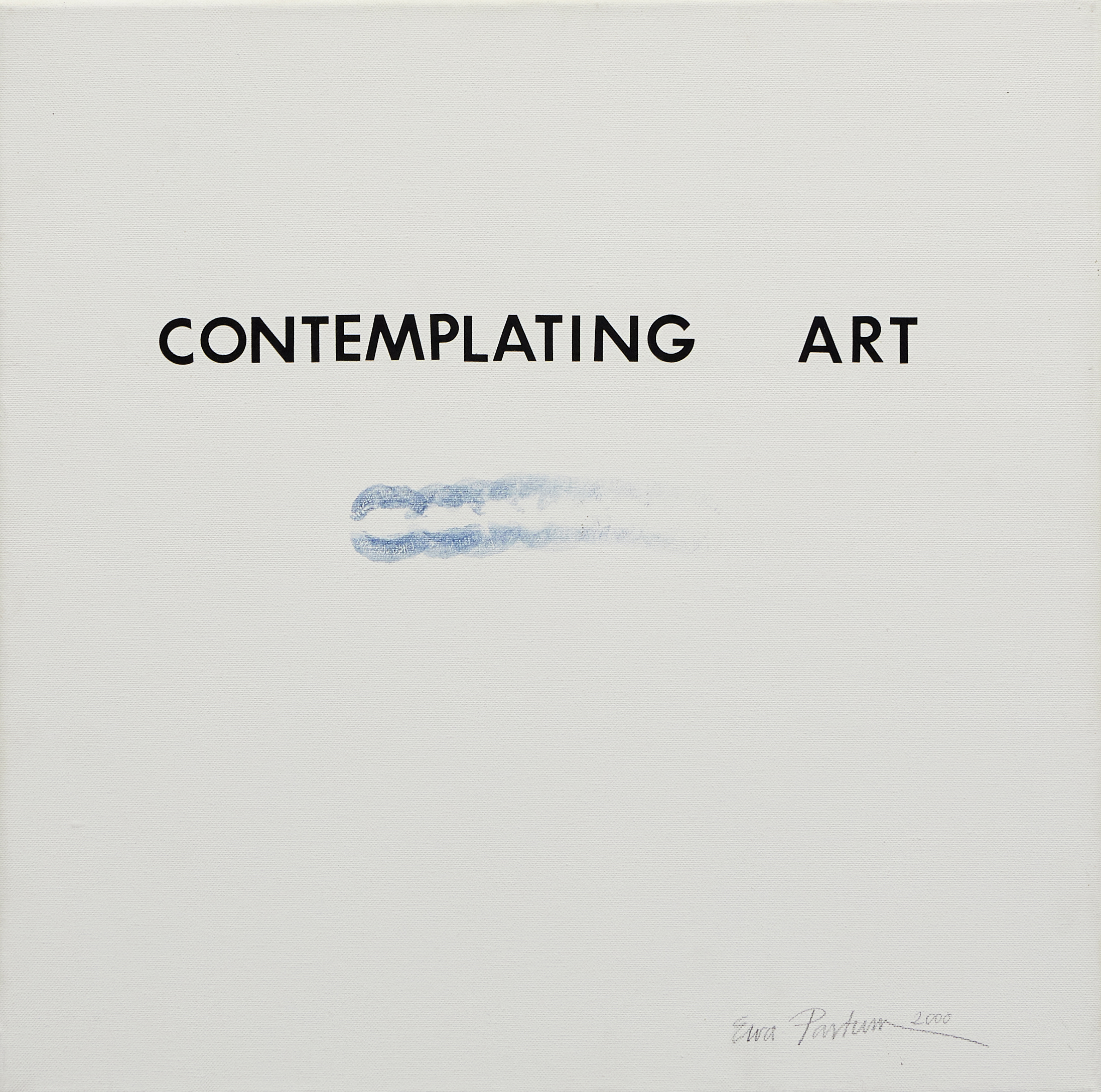
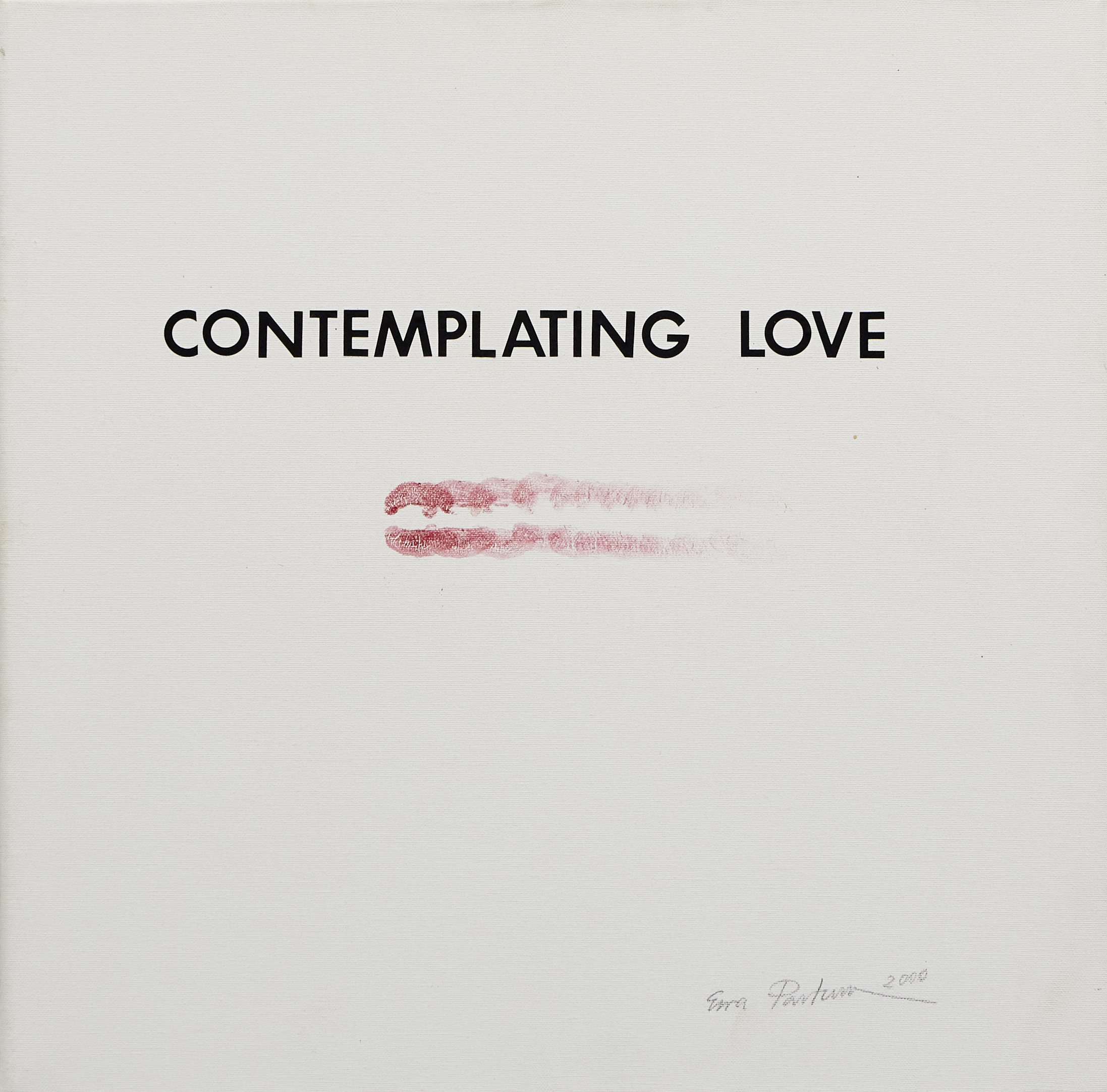
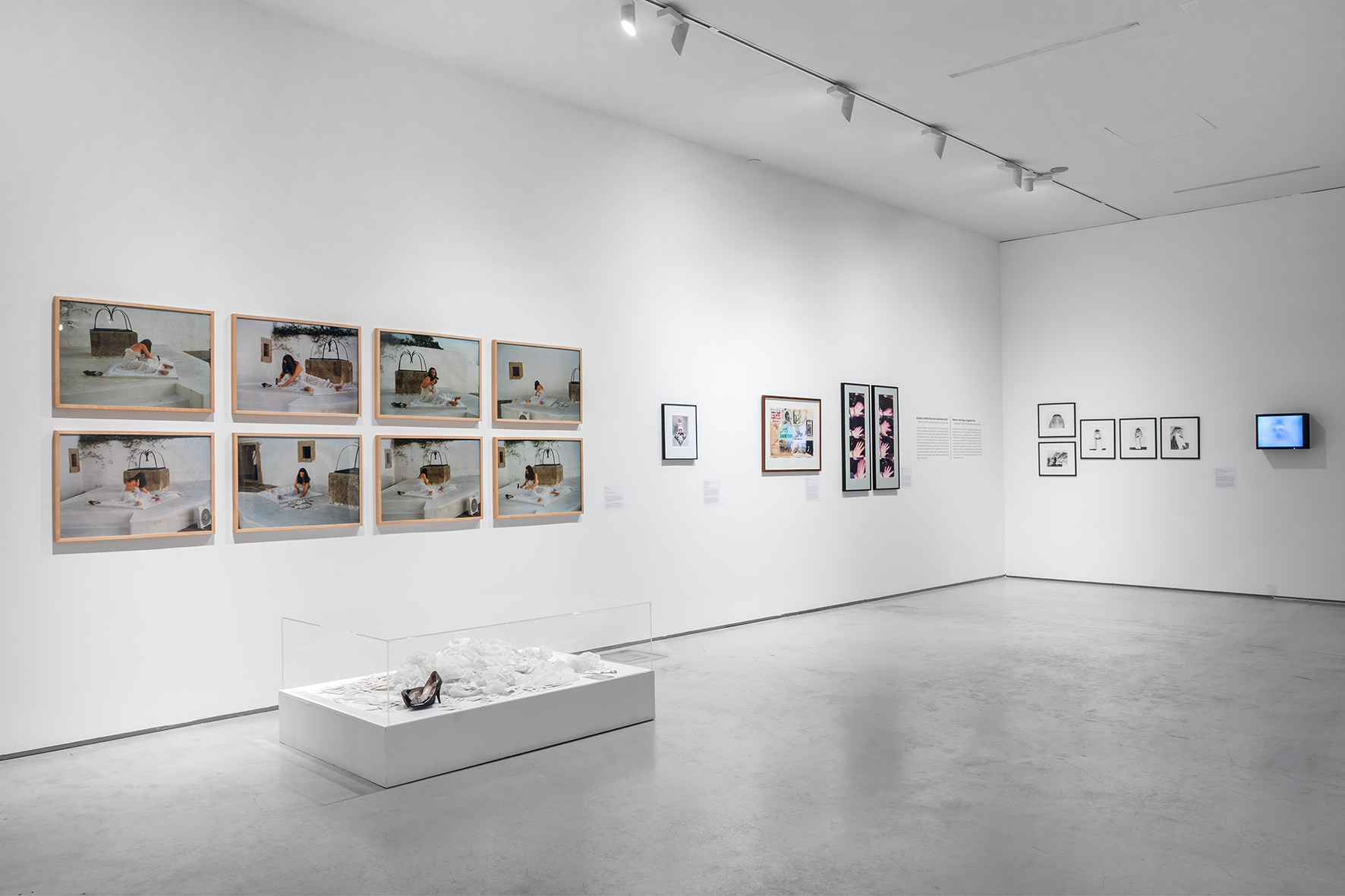
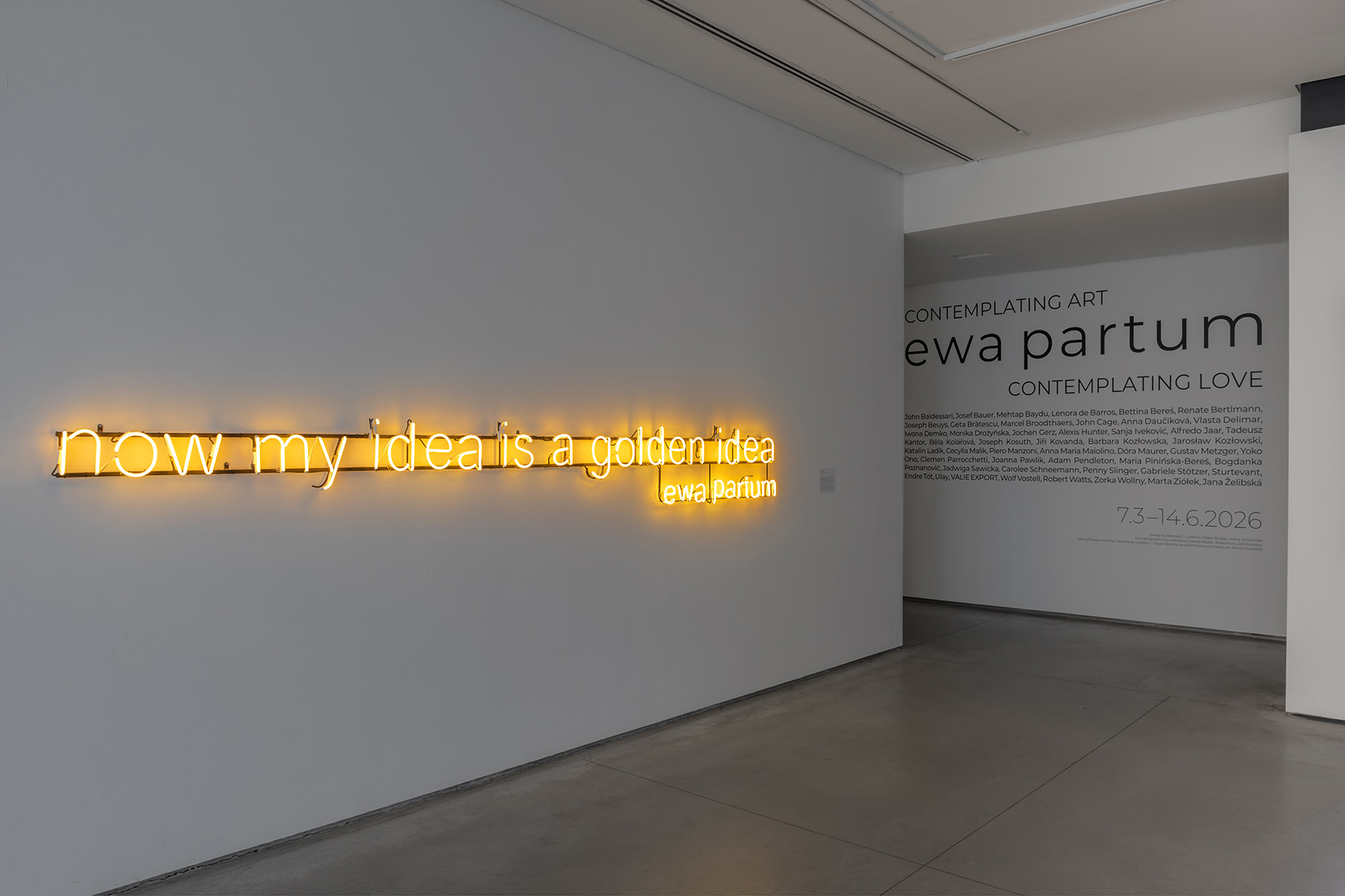
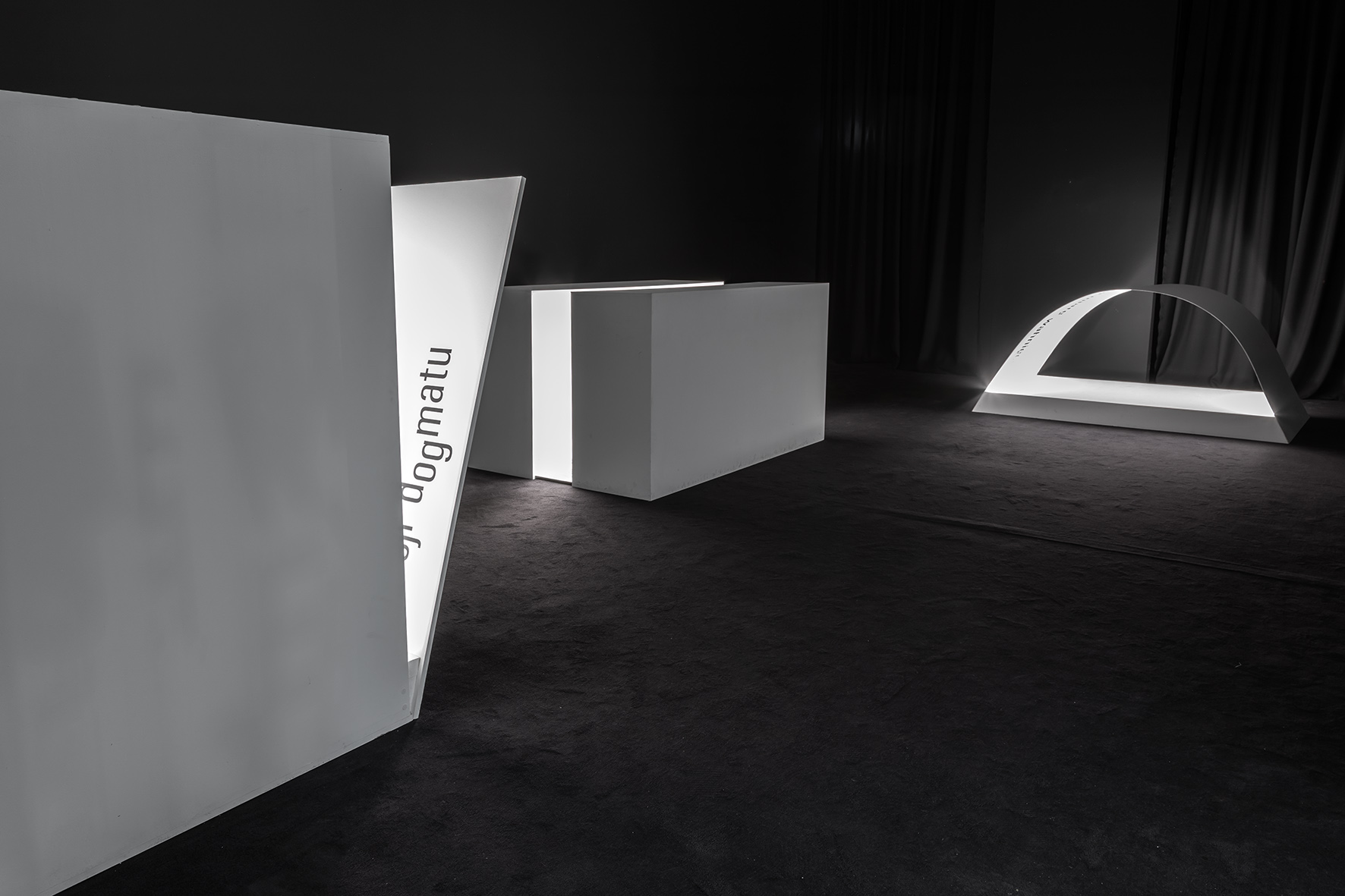
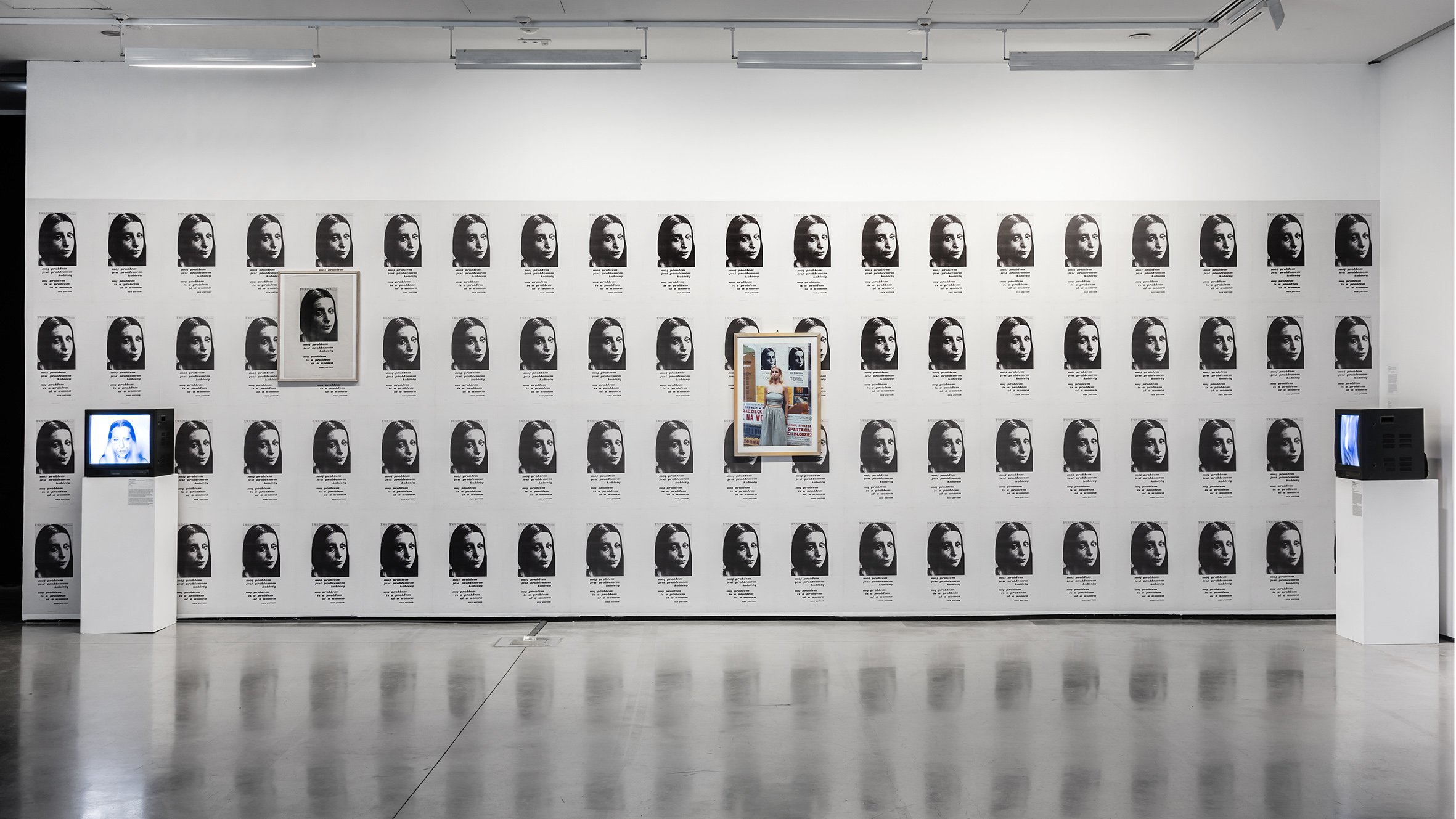
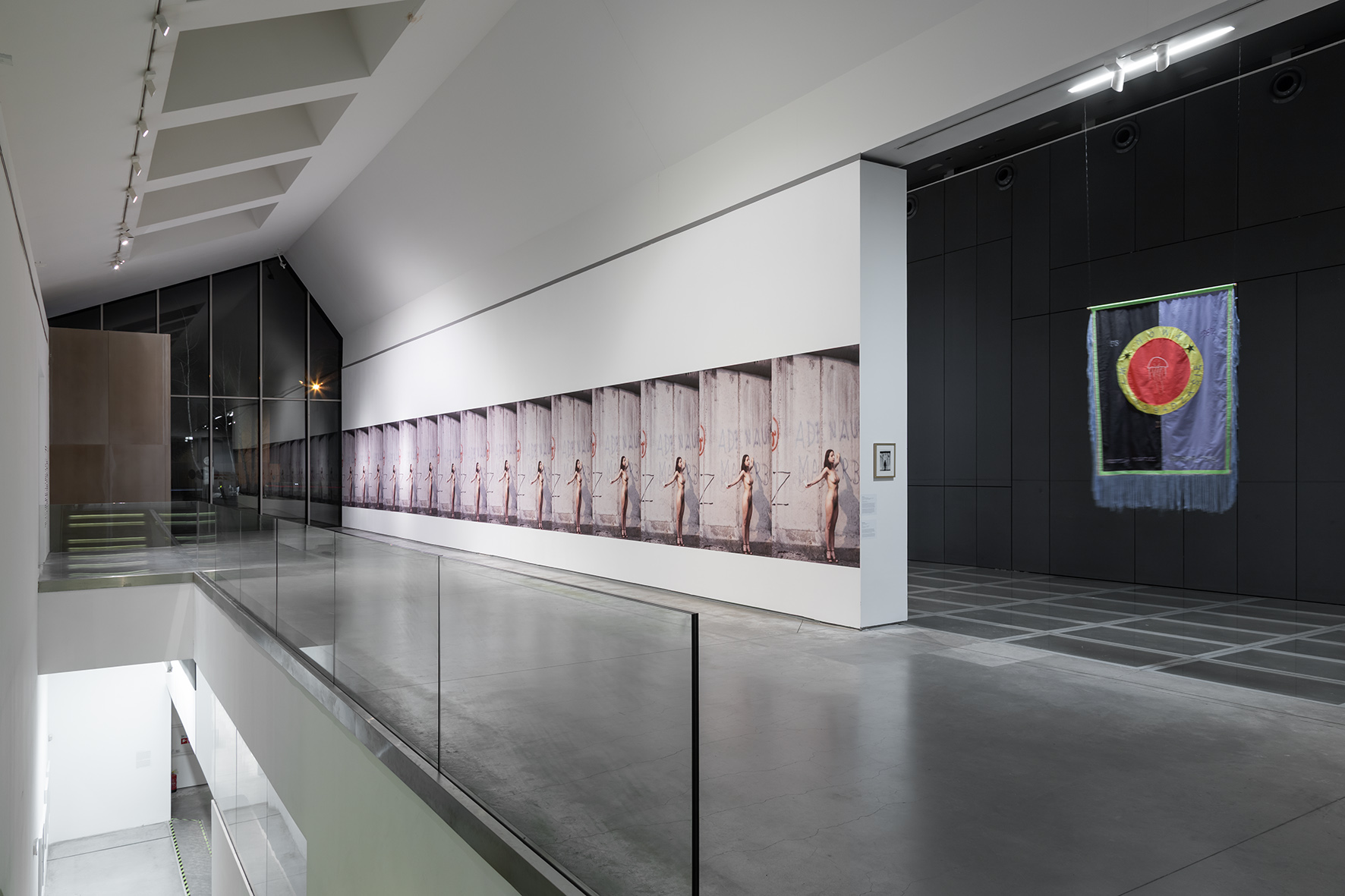
John Baldessari, Josef Bauer, Mehtap Baydu, Lenora de Barros, Bettina Bereś, Renate Bertlmann, Joseph Beuys, Geta Brătescu, Marcel Broodthaers, John Cage, Vlasta Delimar, Iwona Demko, Monika Drożyńska, Jochen Gerz, Alexis Hunter, Sanja Iveković, Alfredo Jaar, Tadeusz Kantor, Běla Kolářová, Joseph Kosuth, Jiří Kovanda, Barbara Kozłowska, Jarosław Kozłowski, Katalin Ladik, Cecylia Malik, Piero Manzoni, Anna Maria Maiolino, Dóra Maurer, Gustav Metzger, Yoko Ono, Clemen Parrocchetti, Joanna Pawlik, Adam Pendleton, Maria Pinińska-Bereś, Bogdanka Poznanović, Jadwiga Sawicka, Carolee Schneemann, Penny Slinger, Gabriele Stötzer, Sturtevant, Endre Tot, Ulay, VALIE EXPORT, Wolf Vostell, Robert Watts, Zorka Wollny, Marta Ziółek, Jana Želibská
Curators: Adam Budak, Marta Smolińska
Co-ordinators: Marta Műller, Aleksandra Żelichowska
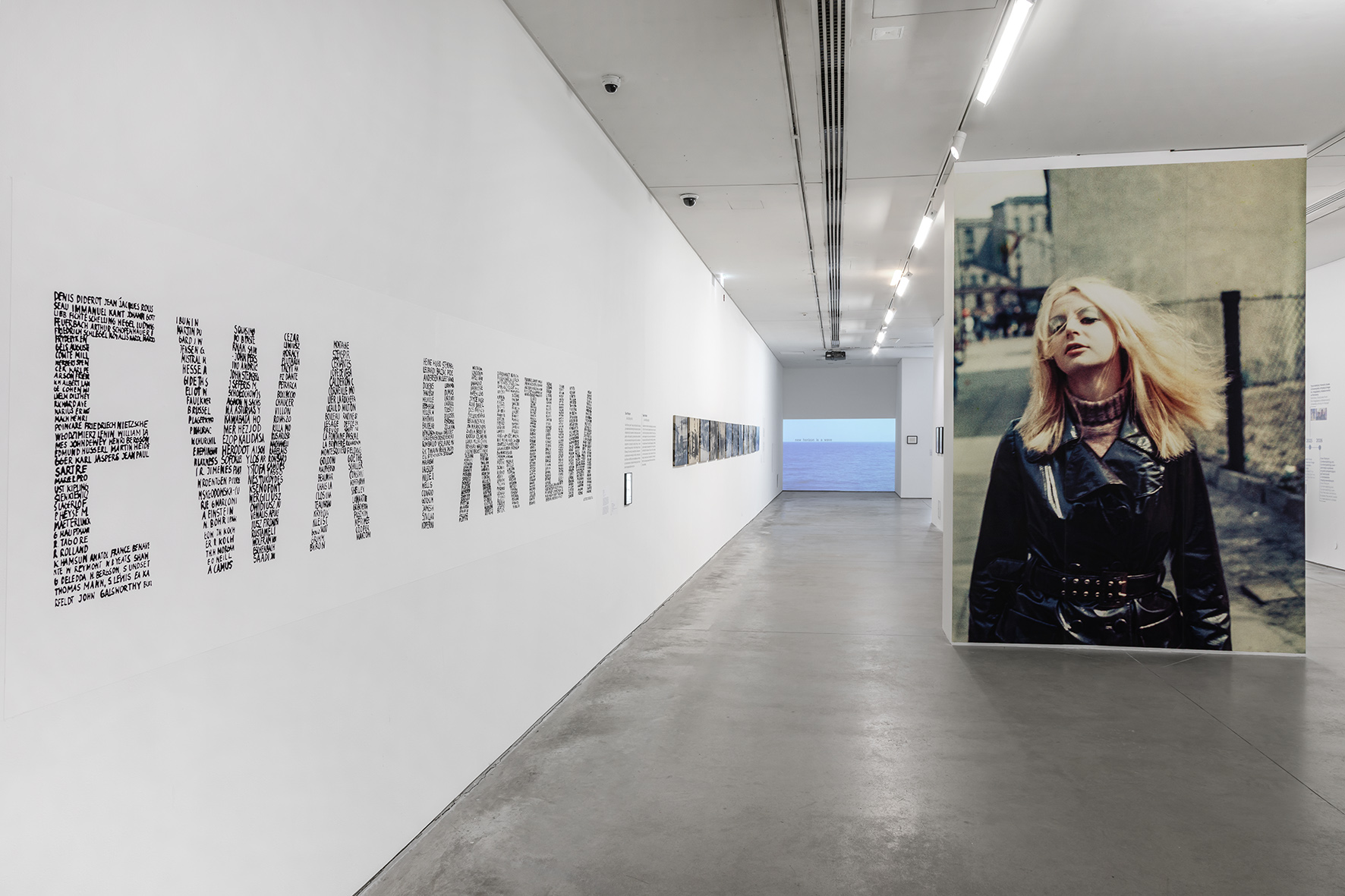
Ewa Partum (b. 1945) celebrates her 80th birthday and 60th anniversary of her artistic career. In the reality of socialist Poland and a conservative, Catholic society, she deliberately emphasised that her art was the voice of women. She confronted the male-centred neo-avant-garde by creating incarnated conceptualism and developing visual poetry as a tool for a critique of the roles and positions of women in the art world. Her activities went beyond institutions to encompass public space. She made the lipstick imprint of her lips her trademark, and her naked body – a medium for confronting authority. She ran the Adres gallery in Łódź, an important venue for mail art and anti-institutional discourse, and engaged in dialogue with Fluxus. The title of the exhibition, taken from the artist’s works, highlights the inseparable connection between art and physicality, sensuality, and love.
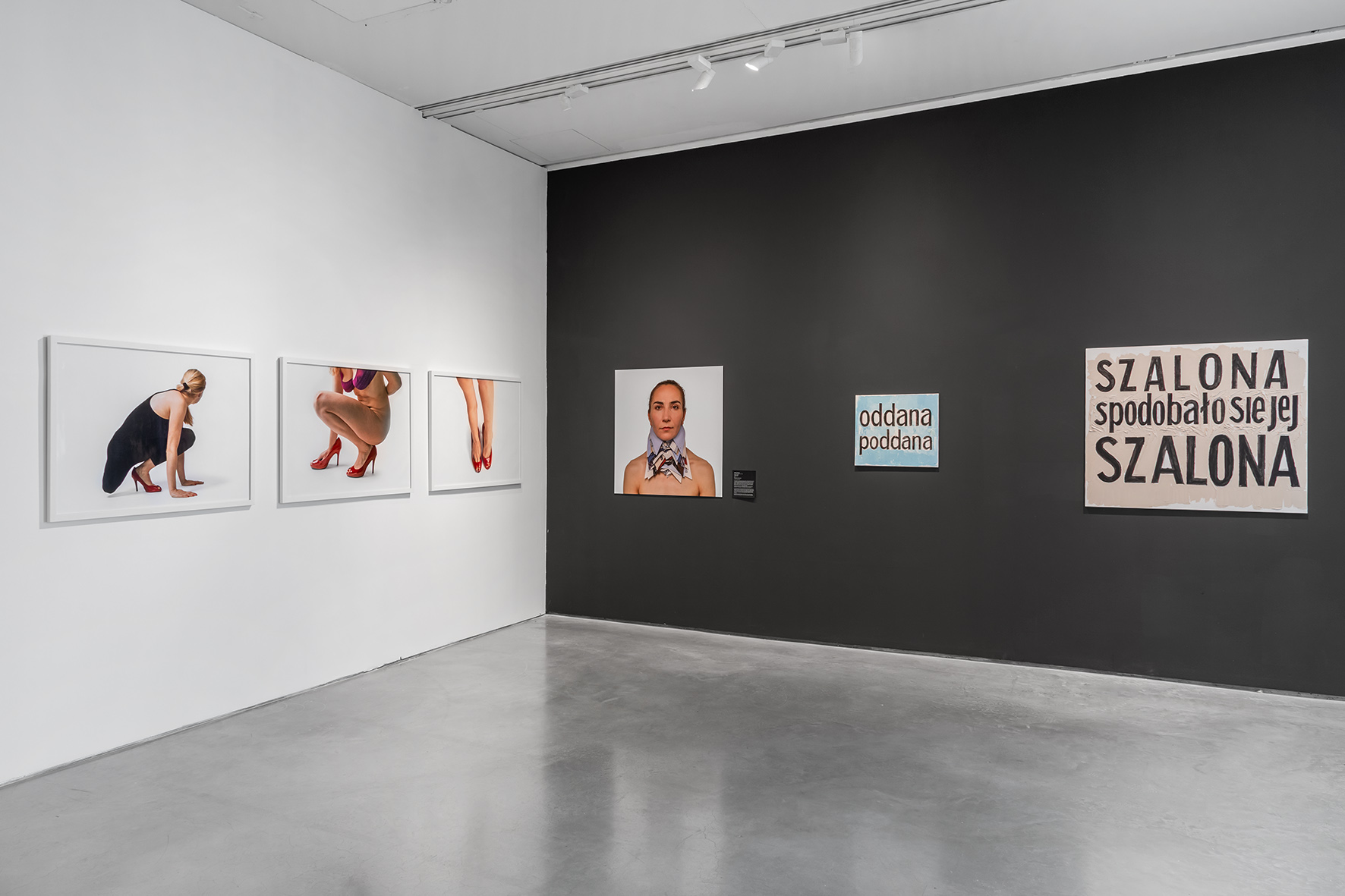
The exhibition aims to contextualise Partum’s work – both in relation to her contemporaries (Joseph Beuys, George Maciunas, Katalin Ladik, VALIE EXPORT) and to artists today who are developing the strategies of feminist rebellion she initiated (Iwona Demko, Monika Drożyńska, Joanna Pawlik). The main themes include the body, touch, imprint, voice as a physical and political medium, criticism of patriarchy, écriture féminine, social engagement and opacity of communication.
Ewa Partum (born 1945)
Born in 1945 in Grodzisk Mazowiecki. She is one of the most important and courageous conceptual and feminist artists of the second half of the 20th century. Since the late 1960s, Partum has been developing her own artistic language – from the very beginning deeply political, emancipatory, and critical of power, the system and the patriarchal structures of art and society. Her works, actions in public space and performances not only undermined artistic canons, but also questioned social norms regarding femininity, the body and freedom.
Early years and artistic beginnings
Partum began her art studies in Łódź (1963–1965) and continued in Warsaw (1965–1970), where in her diploma thesis she combined painting with conceptual poetry. Her early interest in language and communication led her to activities that broke down language as a tool of power and control. As early as 1969, she was investigating the structure of signs and meanings, and her works explored the relationships between text, image and body. In defiance to the dominant, male-centred conceptualist discourses, the artist developed embodied conceptualism, activating the sense of touch and the imprint of the body. She stressed that her problem was a woman’s problem, speaking in the first person and highlighting her gender.
The Legality of Space (Łódź, 1971) – critical intervention in public space
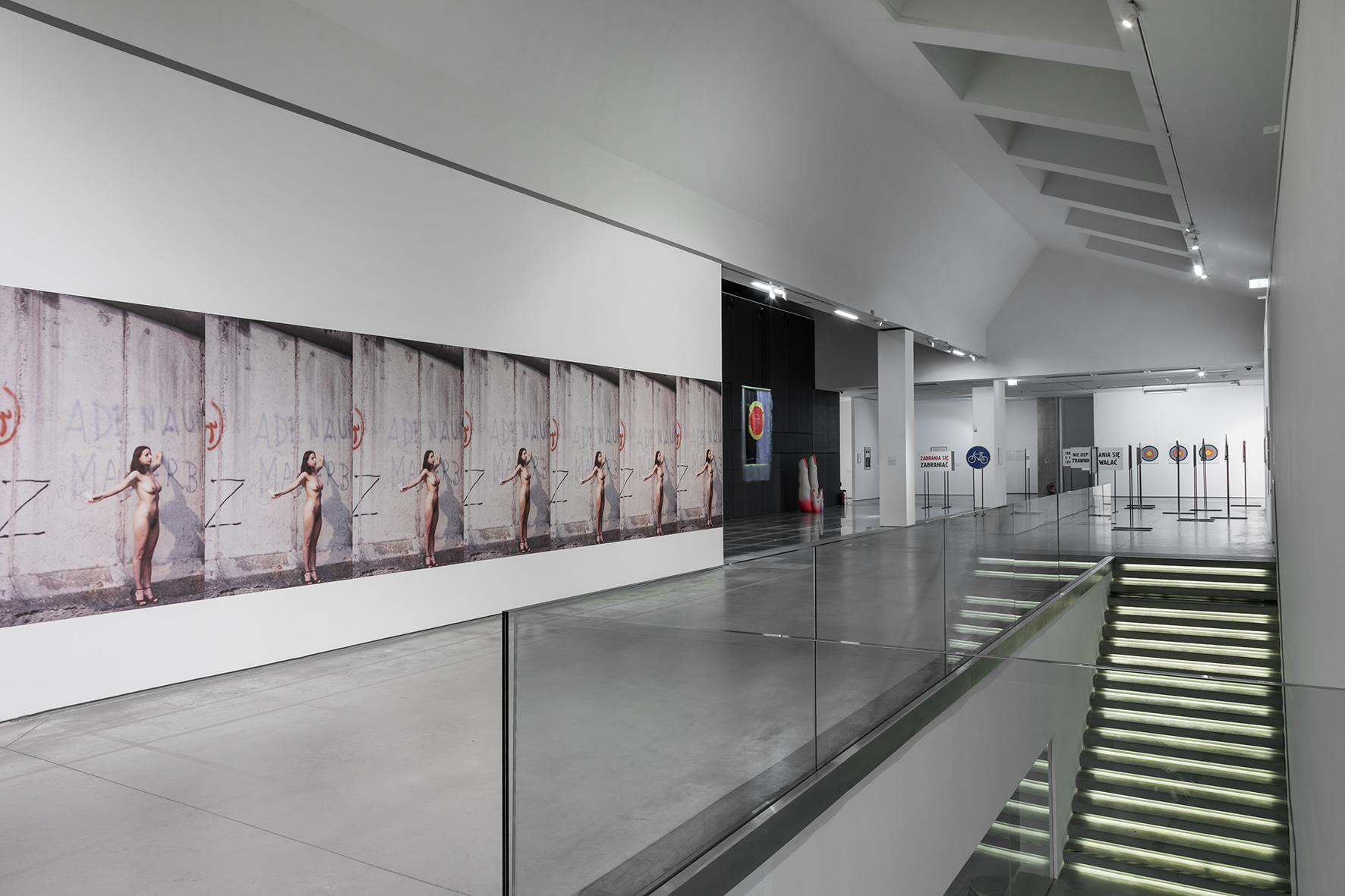
One of Partum’s most important early actions was the 1971 installation The Legality of Space, carried out on Plac Wolności [Freedom Square] in Łódź. The artist set up a dense network of prohibition and command signs there – both genuine road signs and ones she created herself, with absurd content, such as ‘It is forbidden to forbid’. This work exposed the mechanisms of power manifested in a system of signs and rules, demonstrating how public space is controlled and freedom is interpreted through imposed frameworks. Partum said at the time that she wanted to ‘go out on the street and say that there is no freedom, that power is conveyed through signs’.
This action is one of the earliest examples of public art in Poland, in which the artist not only intervened in the urban landscape, but also framed the space as a field of political discussion and conflict. Her installation was a form of criticism of institutions and everyday activities that are often taken for granted and considered neutral.
Adres Gallery and art as an emancipatory practice
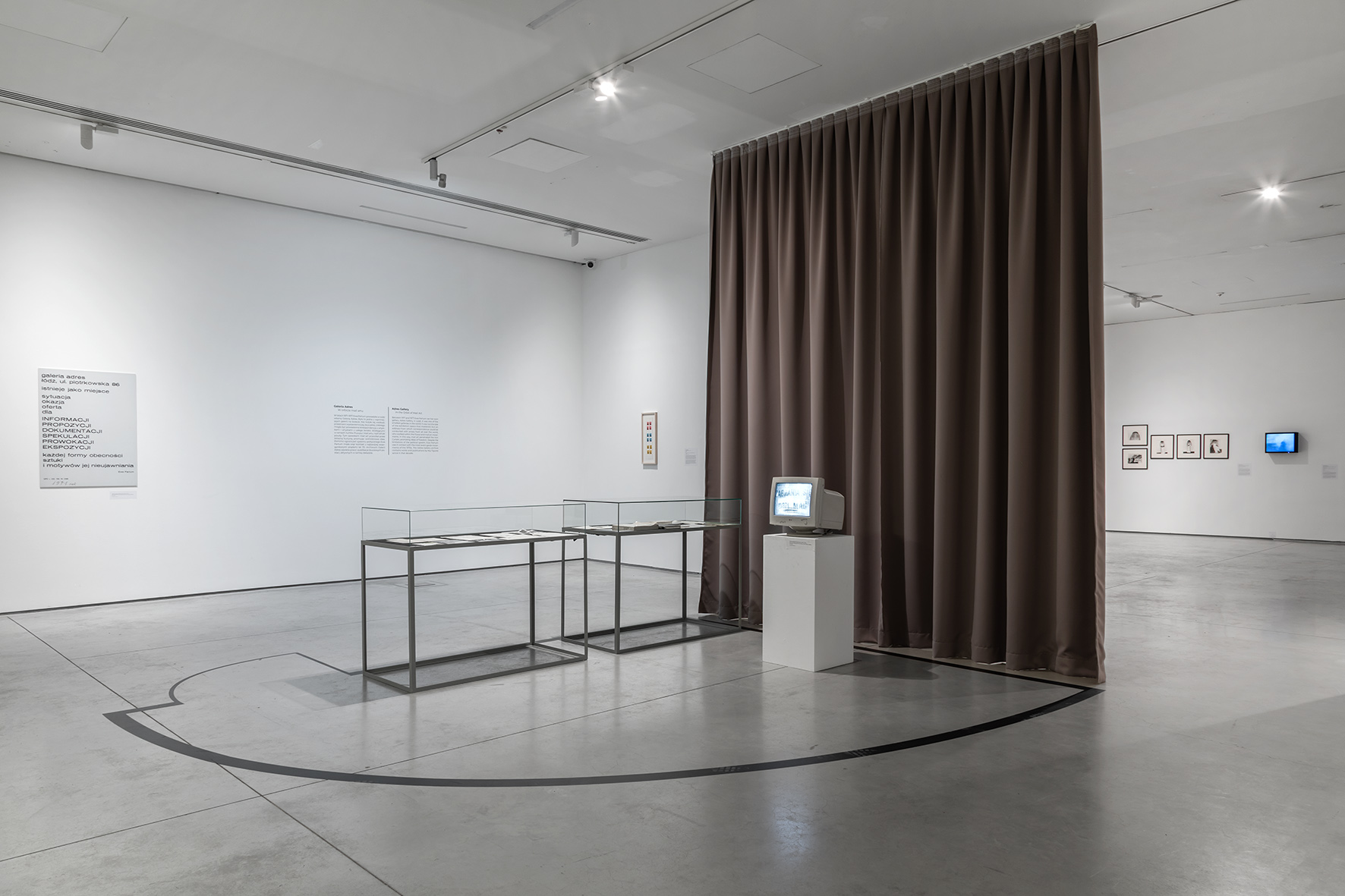
Between 1971 and 1977, Partum ran Adres, her own gallery in Łódź, which was not a typical exhibition space, but rather a place for the exchange of ideas, documentation, provocation and artistic speculation. Operating within the framework of mail art, the gallery became an important point of artistic exchange with the network of conceptual artists and with Fluxus, making possible participation in international critical dialogue despite the limitations of the system.
Self-identification – body, identity, rebellion
In 1980, Partum presented the series Self-Identification at the Mała Galeria in Warsaw, in which the artist’s naked body in public space played a key role. In a series of collages, she appeared naked in various situations: among passers-by, at a pedestrian crossing, next to a policewoman or in front of the presidential palace. Through this act of non-conformity with conventional social expectations, Partum raised questions about women’s right to their own identity, presence in public space, and to be subjects rather than objects of observation.
Her performances often referred to the concept of ‘the body as a tool of thought’ – with the naked body not eroticised but rather employed as a sign that confronted the viewer with their own prejudices. Indeed, Partum declared that she would perform naked until women achieved equality in the art world and beyond.
Political and social background of her activities
Partum’s activities in Poland took place in the context of growing social tensions, discussions following March 1968, and subsequent repression, including martial law. Her works, such as the performance Hommage à Solidarity (1982), combined feminism with Solidarity’s political criticism of the system. Appearing naked, she created media signs and symbols of solidarity, while at the same time commenting on the restrictions on artistic and civil liberties.
Ost-West-Schatten – body and political border in Berlin
After obtaining a visa, Partum moved to West Berlin, where she continued her activities in a more politically and culturally complex context. In 1984, she prepared the project Ost-West-Schatten (East-West Shadow) as part of a competition related to the Berlin Wall. Standing naked in high heels in front of the Berlin Wall, holding the letter ‘O’ in her left hand and ‘W’ in her right, Partum used her shadow as a tool of artistic criticism – her shadow glided across the wall like the hand of a sundial, moving from east to west. It was a powerful, poetic gesture that connected the body, time, political borders and the division of the world – while simultaneously questioning that border through language, the body, and the body as language.
Heritage and significance
Today, Ewa Partum is considered a pioneer of feminist art, body art and conceptual art in Poland and Europe. Her works have been shown at numerous international exhibitions, including WACK Art and the Feminist Revolution (2007), and her installations and performance documentation can be found in the collections of institutions such as MoMA and Tate Modern. Not only did Partum break taboos related to physicality, sexuality and femininity, but also developed the language of art as a tool for emancipation, social and political criticism, and a space for dialogue about power, identity and freedom. Her courage became a manifestation of how art can be a form of political action that not only comments on the world but also actively transforms it.
Prof. Marta Smolińska – art historian and curator; since 2021, full professor in the field of art studies. She lectures on contemporary art theory and curatorial strategies at the Magdalena Abakanowicz University of Arts in Poznań. Head of the Department of Curatorship and Art Theory at the same university. Author of several books (including Haptyczność poszerzona. Zmysł dotyku w sztuce drugiej połowy XX i początku XXI wieku, Universitas, 2020) and numerous articles on art history. Curator of over 100 exhibitions (including in Poland, Germany, Austria, Hungary and Romania). She collaborates with national, municipal, private and collective institutions – from large and prestigious to small and alternative. Together with Maike Steinkamp, PhD and Joachim Jäger, PhD, she is curating the presentation of the Neue Nationalgalerie Zerreissprobe collection. Art between Politics and Society 1945–2000 (18 November 2023 – 25 April 2027). In 2025–2026, she has been curating the exhibition series Was nehmen wir mit? at the gallery of the Polish Institute in Berlin.

