
Equivoque images Łukasz Zaremba
We all know these types of images – at first some see one thing in it, the others something else, then after a second, we learn by turns how to notice either one thing or the other, but never two things at once: fiancé or mother in law, Freud or a naked woman, a duck or a rabbit. Michał Rusinek, among many terms applied in these visual representations (dialectic images, multi-stable) chooses the name “equivoque images” and as its most famous realization proposes a square presenting a cup or two faces. However, either the choice of the name or the choice of the example seems to be wrong. It’s not to convince that the duckrabbit is more famous, which in 1892 appeared in „Fliegende Blätter”, a satiric magazine read by Freud to return in many versions at Wittgenstein, Gombrich and finally in contemporary version of iconology of W.J.T. Mitchell. The disagreement about which of the images is more important is senseless, especially that today the most famous image of this sort is the supermarket’s Carrefour logo … It’s also not about the fact that the author in this case hasn’t noticed or ignored the equivocality of the wording “equivoque images” (please look up what will google provide if you type up this term in the section “images”, it won’t be “two faces or a cup”), but mainly it’s about the fact that the entire book comprises disambiguation of images, taking away the any bi- or polysemy.
Rhetoric of the Image is supposed to rely on a dialogue of specialized language, language of rhetoric – elaborated on the text analysis – with images. However, the image choice represented by the works of Maurits Cornelis Escher and the choice of elements which are indicated as prominent in these images are tried to be avoided. Escher’s graphics, placed not only on the joint of art and something we would call design today, but also visual arts and mathematics which facilitate the task of searching for determined constructions – they present them almost on the surface. Rusinek is interested only in the way of presenting, more rarely in elements which create this presentation. The choice of the artist seems to justify it.
In the meantime, watching the equivoque images and trying to “switch over” from one to another, we change the angle of looking, doing something more adequate for viewers of anamorphic images, also built on the construction eiter-either. This kind of change of point of view, the change of context reminds that in order to have anamorphosis, the image needs to be plain and has to be hung on the wall. These contexts constitute not only elements of persuasion of the visual presentation but in general its condition. By the reference in the title to the text of Roland Barthes, Rusinek significantly limits the elements included by the author of Mythology in his analysis of the rhetoric of advertisements of puree and pasta of the brand Panzani. Understanding the rhetoric as “the theory of discourse focused on persuasion, topic and figuration,” Rusinek excludes from the rhetoric of image the social functioning of images (Barthes chose an advertisement for his analysis!) and also their media. It’s in The Rhetoric of the Image (by Barthes), the term of photography “message without code” appears … Images reproduced in the book by Rusinek exist apart from their media, environments and social functions.
Limited understanding of the image in the Rhetoric of the Image/ Retoryka Obrazu by Rusinek, described above, in a way, contributes to an exceptional unequivocality of analyzed representations. It didn’t probably have to be this way. Author aimed at finding a common denominator for texts and images (perceptive theory of figures), conscious of long discussion about relations between sister art pieces. But finally, despite the announcements that the discourse will not only enlighten the images but also the images will influence the understanding of the discursive structures, analysis of the visual presentations lead to finding the rhetoric category correspondent to discernible constructions in it. So coming back to equivocality of the cup or two faces – term of the multistable image as a syllepsis means depriving this image of any “equivocality”. The images don’t extend nor undermine the category of rhetoric and they don’t propose their own rhetoric figures. There is nothing about jargon, not to say, image language (is it possible to separate the cognitive function from the perceptive one in the case of the physically existing visual images?). We won’t find then “the Medusa effect”, focalization (literary and visual), meta images or finally images as a theory (instead of images as in illustration of theory like in Rusinek’s works).
When today in the studies of visual culture, a question pops up about rhetoric of images, it is understood as a question about their power (power of images) and ways of enforcing it, about its social functions and connected ideological dangers. Nevertheless, it is not necessary to refer to the most recent works from the domain of visual culture in order to extend the understanding of the rhetoric of images. In 2012, there will be the 40th anniversary of the publishing of Ways of seeing by John Berger celebrated (in an astonishingly sumptuous way for the Academic millieu). On this occasion, Mieke Bal drew attention to the fact that one of the most famous contributions of this work and previous series of television programs was the emphasis of the multitude and diversity in ways of viewing, already applied in the title by the plural form. Maybe the time for the Rhetoric of Images has come?
Łukasz Zaremba
Łukasz Zaremba (born in 1983) a Ph.D. Student at Section for Film and Audiovisual Culture at the Institute of Polish Culture, the University of Warsaw, translator, scholar of Foundation for Polish Science Start 2012. He published, among others, in “Konteksty”, “Kultura Współczesna” and “Dialog”. Along with Magdalena Szcześniak, he writes about TV series for dwutygodnik.com and he edits the blog blog: http://malakulturawspolczesna.org.
-
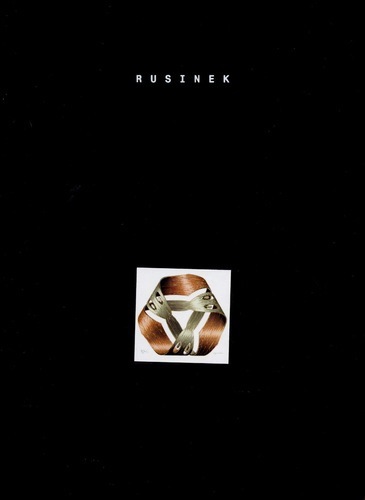 Michał Rusinek Retoryka obrazu/ Rhetoric of the Image 216 pages Word/image of the territory Gdańsk 2012 ISBN 978-83-7453-086-6
-
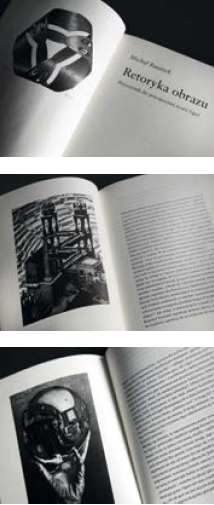 Michał Rusinek Retoryka obrazu/ Rhetoric of the Image 216 pages Word/image of the territory Gdańsk 2012 ISBN 978-83-7453-086-6

